
Artificial Intelligence (AI) is no longer a technology of the future. It is already part of our daily lives, shaping how we work, communicate, shop, travel, and make decisions. From chatbots answering customer questions to software analyzing huge amounts of data in seconds, AI is transforming industries at a speed that many people never expected.
As AI continues to advance, one question keeps coming up: What will happen to jobs?
Some people worry that machines will replace workers entirely. Others believe AI will create new opportunities and make work easier. The reality lies somewhere in between. AI is changing the nature of work rather than simply eliminating it. Many routine tasks are becoming automated, while new roles are emerging that require creativity, problem-solving, emotional intelligence, and technical skills.
Understanding how AI is changing jobs is important for employees, business owners, students, and job seekers. The workplace of tomorrow will look different from today’s workplace, and those who adapt early will have a significant advantage.
In this guide, we’ll explore how AI is transforming employment, which jobs are most affected, what opportunities are being created, and how individuals can prepare for an AI-driven future.
Understanding AI’s Role in the Modern Workplace
Artificial Intelligence refers to computer systems that can perform tasks that normally require human intelligence. These tasks include learning from data, recognizing patterns, understanding language, making predictions, and solving problems.
In today’s workplace, AI is often used to improve efficiency rather than completely replace workers. Businesses use AI to automate repetitive processes, reduce human error, and increase productivity.
For example:
- Banks use AI to detect fraud.
- Retail companies use AI to recommend products.
- Hospitals use AI to assist in medical diagnoses.
- Marketing teams use AI to analyze customer behavior.
- Customer service departments use AI-powered chatbots.
Consider a customer support team that receives thousands of inquiries daily. Instead of having employees answer simple questions repeatedly, an AI chatbot can handle common requests such as password resets or order tracking. Human agents can then focus on complex issues that require judgment and empathy.
This shift highlights an important point. AI is often replacing tasks rather than entire jobs. Most occupations involve multiple responsibilities, and while AI can automate some of them, many still require human involvement.
As organizations adopt AI tools, workers are finding that their roles are evolving. Rather than spending time on repetitive activities, employees can focus on higher-value work that requires strategic thinking and creativity.
The workplace is becoming a collaboration between humans and intelligent systems, creating a new model of productivity that blends technology with human expertise.
Which Jobs Are Most Likely to Be Affected by AI?
Not all jobs face the same level of disruption. AI is particularly effective at handling predictable, repetitive, and data-driven tasks.
Jobs that involve routine activities are generally more vulnerable to automation.
Examples include:
Data Entry
AI systems can process and organize information much faster than humans. Many data-entry tasks are already being automated.
Administrative Support
Scheduling meetings, organizing documents, and managing emails can increasingly be handled by AI-powered software.
Basic Customer Service
Many businesses use virtual assistants and chatbots to answer common customer questions.
Manufacturing and Assembly
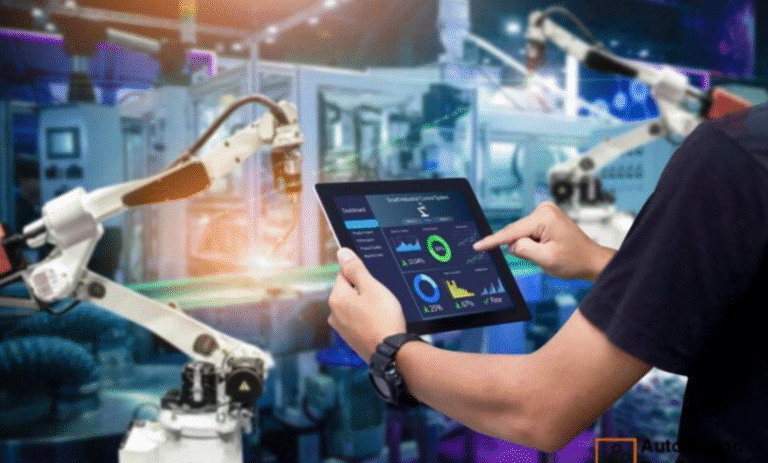
Robotics combined with AI can perform repetitive factory tasks with high accuracy.
Bookkeeping and Accounting Tasks
AI can automate invoice processing, expense tracking, and financial reporting.
However, this does not necessarily mean these professions will disappear. Instead, workers may shift toward more strategic responsibilities while AI handles routine work.
For example, accountants are increasingly focusing on financial planning, consulting, and analysis rather than manual calculations.
The key takeaway is that jobs involving repetitive patterns are likely to change significantly, but many will evolve rather than vanish.
Jobs That Are Expected to Grow Because of AI
While AI may reduce demand for certain tasks, it is also creating entirely new career opportunities.
History offers a useful lesson. When computers became common, some jobs disappeared, but many new professions emerged, including software developers, cybersecurity experts, and digital marketers.
Similarly, AI is generating demand for new skills and occupations.
AI Specialists
Businesses need professionals who can develop, train, and maintain AI systems.
Data Scientists
Data is the fuel that powers AI. Companies require experts who can analyze and interpret large datasets.
Machine Learning Engineers
These professionals build systems that enable machines to learn and improve over time.
AI Ethics Consultants
As AI becomes more powerful, organizations need guidance on fairness, privacy, and responsible use.
Cybersecurity Professionals
AI systems require strong security measures to prevent misuse and cyberattacks.
Digital Marketing Experts
AI tools generate insights and automate tasks, but human marketers are still needed to create strategies, understand audiences, and build brand relationships.
According to research from organizations such as the World Economic Forum, technological change is expected to create millions of new jobs globally while transforming existing ones.
The future workforce will likely include many positions that do not exist today.
How AI Is Changing Skills Requirements
One of the biggest shifts caused by AI is the changing demand for workplace skills.
In the past, technical knowledge alone was often enough to secure long-term employment. Today, adaptability is becoming equally important.
Workers increasingly need a combination of technical and human skills.
Technical Skills
These include:
- Data analysis
- AI literacy
- Digital tools
- Programming basics
- Automation software
Human Skills
These remain difficult for AI to replicate:
- Creativity
- Critical thinking
- Leadership
- Emotional intelligence
- Communication
- Collaboration
Imagine two employees performing similar jobs. One understands how to use AI tools effectively, while the other avoids them. The first employee can often complete tasks faster, make better decisions, and provide greater value to employers.
This doesn’t mean everyone needs to become a programmer. Instead, workers should learn how AI tools can enhance their specific roles.
The ability to work alongside AI may become one of the most valuable career skills of the next decade.
Real-World Examples of AI Transforming Industries
AI’s impact becomes clearer when we look at real-world applications.
Healthcare
Doctors use AI systems to analyze medical images and identify diseases earlier. These tools assist healthcare professionals by providing additional insights, but doctors still make final decisions.
For example, AI can help detect abnormalities in X-rays faster, allowing physicians to focus on treatment planning and patient care.
Marketing
Marketing teams use AI to analyze customer behavior, predict trends, and personalize content.
A company selling online products can use AI to recommend items based on previous purchases. This improves customer experience while increasing sales.
Finance
Banks use AI for fraud detection, risk assessment, and customer support.
Instead of manually reviewing millions of transactions, AI systems can identify suspicious patterns within seconds.
Education
Teachers increasingly use AI-powered tools for grading, lesson planning, and personalized learning.
Students receive customized recommendations that help them learn at their own pace.
These examples demonstrate that AI is not simply replacing people. It is becoming a powerful assistant that helps professionals work more effectively.
The Benefits of AI in the Workplace
AI offers several advantages for both businesses and employees.
Increased Productivity
Routine tasks can be completed much faster through automation.
Better Decision-Making
AI can analyze large amounts of information and identify patterns that humans might miss.
Reduced Errors
Automated systems often reduce mistakes in repetitive processes.
Enhanced Customer Experience
Businesses can provide faster responses and personalized services.
More Time for Creative Work
Employees can focus on strategy, innovation, and relationship-building instead of repetitive tasks.
For organizations, these benefits can improve efficiency and competitiveness. For workers, AI can eliminate tedious work and create opportunities for more meaningful contributions.
Challenges and Concerns About AI and Employment
Despite its benefits, AI also presents challenges.
Job Displacement
Some workers may lose their roles as businesses automate certain tasks.
Skills Gaps
Employees may struggle to adapt if they lack access to training and education.
Economic Inequality
Workers with advanced skills may benefit more from AI adoption than those in lower-skilled positions.
Privacy and Ethical Issues
AI systems often rely on large amounts of data, raising concerns about privacy and responsible use.
Overreliance on Technology
Businesses that depend too heavily on AI may face risks if systems fail or produce inaccurate results.
These concerns highlight the importance of responsible AI implementation. Governments, businesses, and educational institutions all play a role in helping workers transition successfully.
Common Mistakes People Make When Preparing for an AI Future
Many professionals misunderstand how AI will affect their careers.
Ignoring AI Completely
Some workers assume AI will not impact their industry. This can leave them unprepared for future changes.
Believing AI Will Replace Every Job
This fear often causes unnecessary anxiety. Most jobs involve human skills that remain valuable.
Focusing Only on Technical Skills
Technical knowledge matters, but communication, creativity, and leadership remain essential.
Waiting Too Long to Learn
Technology evolves quickly. Continuous learning helps workers stay competitive.
Those who actively develop new skills tend to adapt more successfully than those who resist change.
How to Prepare for the Future of Work in an AI-Powered World
Preparing for the future does not require becoming an AI expert overnight.
Start with these practical steps:
Learn AI Basics
Understand how AI works and how it affects your industry.
Use AI Tools
Experiment with AI applications relevant to your profession.
Improve Human Skills
Develop communication, creativity, leadership, and problem-solving abilities.
Stay Updated
Follow industry trends and emerging technologies.
Invest in Continuous Learning
Take online courses, attend workshops, and earn certifications when appropriate.
Build Adaptability
The most successful professionals are often those who can learn and adjust quickly.
Think of AI as a calculator for knowledge work. Just as calculators didn’t eliminate mathematicians, AI is unlikely to eliminate professionals who know how to use technology effectively.
The Future Relationship Between Humans and AI
The future workplace is unlikely to be entirely human or entirely automated. Instead, it will be a partnership.
AI excels at:
- Processing data
- Finding patterns
- Performing repetitive tasks
- Generating predictions
Humans excel at:
- Creativity
- Empathy
- Ethical judgment
- Strategic thinking
- Relationship building
The most successful organizations will combine these strengths.
Rather than asking whether AI will replace humans, a better question is: How can humans and AI work together to achieve better results?
The answer will shape the future of nearly every industry.
Conclusion
Artificial Intelligence is changing the future of jobs in profound ways. While some routine tasks and roles are becoming automated, AI is also creating new opportunities, increasing productivity, and transforming how work is performed.
The workers who thrive in the coming years will not necessarily be those with the most technical expertise. Instead, they will be people who embrace learning, adapt to change, and combine human strengths with technological tools.
AI is not simply replacing jobs. It is reshaping them.
The future belongs to individuals who view AI as a tool for growth rather than a threat. By developing relevant skills, staying informed, and remaining adaptable, professionals can position themselves for success in an increasingly AI-driven world.
Frequently Asked Questions (FAQs)
Will AI replace all jobs in the future?
No. AI is more likely to automate specific tasks rather than eliminate all jobs. Many roles require creativity, judgment, communication, and emotional intelligence that AI cannot fully replace.
Which jobs are safest from AI?
Jobs involving human interaction, leadership, creativity, healthcare, counseling, education, and complex decision-making are generally less vulnerable to automation.
What new jobs is AI creating?
AI is creating roles such as AI engineers, machine learning specialists, data scientists, AI ethics consultants, automation experts, and AI product managers.
How can workers prepare for AI-driven workplaces?
Workers can learn AI fundamentals, improve digital skills, develop strong communication abilities, and commit to continuous learning throughout their careers.
Is AI good or bad for employment?
AI has both benefits and challenges. It can automate certain jobs while creating new opportunities. The overall impact depends on how businesses, governments, and workers adapt to technological changes.
Will AI increase salaries?
For workers who develop in-demand skills related to AI, data analysis, automation, and technology, salary opportunities may increase. However, roles with easily automated tasks may face greater competition.
Can small businesses benefit from AI?
Yes. Small businesses can use AI for customer service, marketing, content creation, data analysis, and workflow automation, helping them compete more effectively with larger companies.
What is the most important skill in an AI future?
Adaptability is arguably the most important skill. People who continuously learn and adjust to new technologies are more likely to succeed in an evolving job market.