

Apple is preparing to redefine its notebook category in 2026, not with a single upgrade, but with a tiered trio of MacBooks, each built for a different lifestyle and expectation. The roadmap includes:
- A value-first portable simply labeled “MacBook.”
- A faster, long-lasting M5-powered MacBook Air
- A next-generation OLED MacBook Pro crafted for pro-grade visual and processing work
This isn’t just another annual refresh; it’s Apple signaling a new classification in performance, display tech, and mobility, targeting everyone from classroom users to high-end creative professionals.
The New Baseline MacBook: Compact, Capable, and Surprisingly Potent
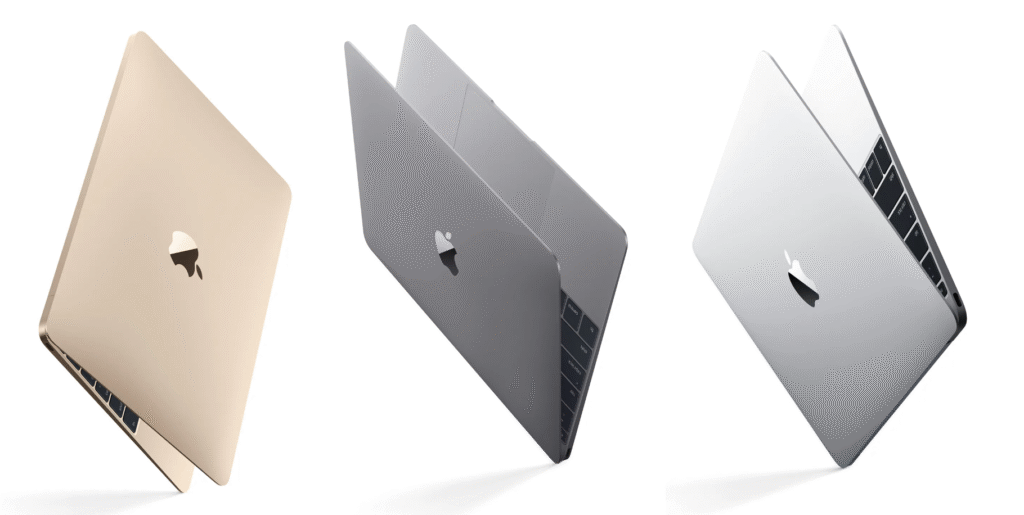
Apple is expected to return to ultra-small laptop design, reviving the spirit of the 12-inch MacBook from 2015-2017, but this time, without holding back on raw capability.
Early reports suggest a price bracket of $599-$649 at launch, with future retail deals possibly pulling it down into the $400-$500 range, a territory Apple rarely steps into. The secret to the pricing lies in silicon choice:
- Instead of traditional Mac “M-series” architecture, Apple may adopt A18 Pro or A19 Pro (iPhone-class chipsets)
- Performance could land at or above M1-level capability, making everyday computing feel smoother than many mid-priced Windows notebooks
- Ideal for non-intensive workloads like browsing, writing, study apps, streaming, and basic content editing
The screen is rumored to stretch wider than its predecessor, landing around 12.9 inches, using an LCD panel capped at 400 nits brightness built for HDR brilliance, but more than sufficient for general use.
Cost-conscious decisions may also show up in storage architecture:
- Base model may include 256 GB using a single NAND chip
- Read/write speeds could take a slight hit compared to multi-module SSD designs
- Thunderbolt and multi-display support may be omitted
- Expected port set: 2 × USB-C 3.2, offering solid wired data speeds, but no eGPU or high-end accessory bandwidth
A major upside for many users: the device is expected in bold finish variants like Blue, Pink, Yellow, and Silver, making it the first MacBook in years to embrace expressive colorways beyond pro minimalism.
MacBook Air M5: Still Thin. Now Smarter and Faster
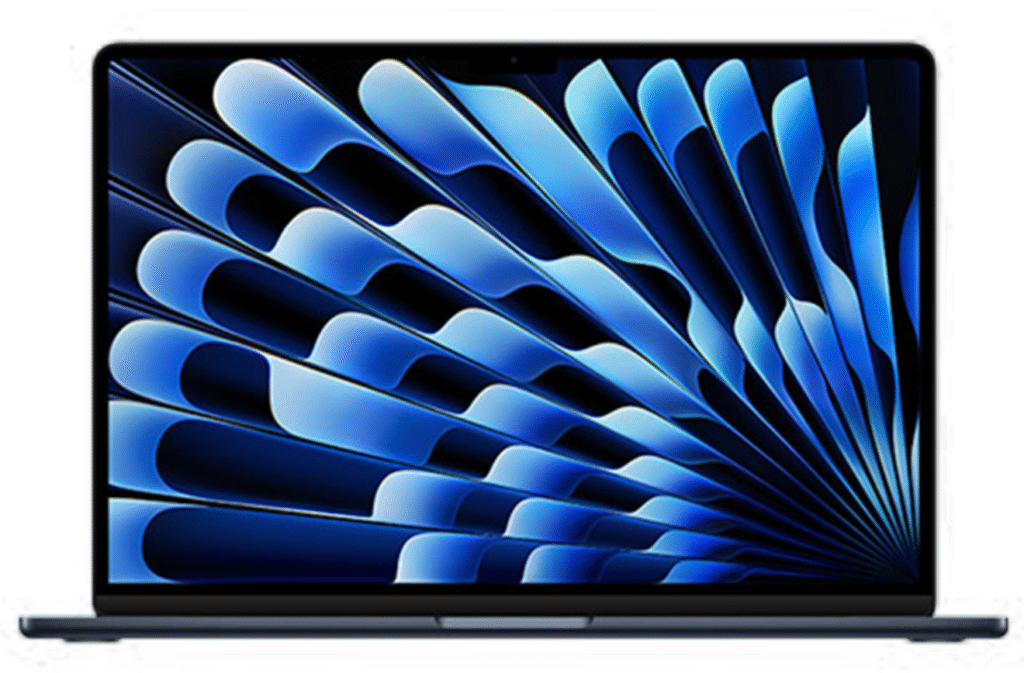
The MacBook Air line evolves again, focusing on what this laptop category has always done best-be light, fast, cool, and reliable.
This time, the upgrade centers on the new M5 chip, expected to deliver notable gains over M4 in:
- CPU performance
- GPU rendering acceleration
- Machine learning efficiency
- Intelligent power distribution for everyday tasks
The display and body design may stay visually close to the current generation, but the connectivity stack is expected to take a leap forward:
- Wi-Fi 7 support
- Bluetooth 6 integration
- Faster internal SSD speeds
- Improved thermal efficiency without increasing power consumption
Apple is expected to keep the starting price locked at $999, reinforcing that the Air remains the best-priced Mac for power-to-portability ratio seekers.
Though this generation sticks to traditional panel tech for now, Apple may roll out a TFT Oxide backplane upgrade in 2027, enabling better dimming precision, improved efficiency, and possibly enhanced refresh rate control-meaning the Air’s display evolution is coming next, but not just yet.
Who it fits best today:
- Students
- Office professionals
- Remote workers
- Mild content creators
- Anyone who wants a long-lasting daily laptop without bulk
MacBook Pro OLED: The Visual Revolution Finally Comes to Mac
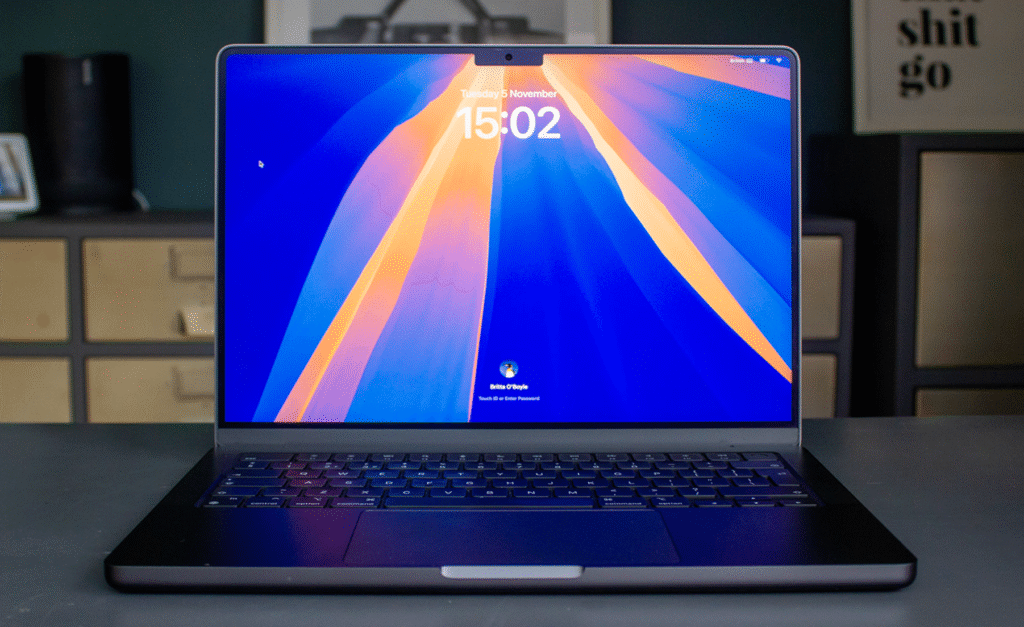
For the top end of its 2026 portfolio, Apple is expected to embrace OLED displays in the MacBook Pro, marking one of the most meaningful screen shifts in the laptop’s history.
Expected advantages include:
- Far higher contrast with true black levels
- More accurate color reproduction
- Better per-pixel brightness control
- Reduced power drain compared to high-bright LCD panels
- A screen experience that favors grading, editing, and visual precision over peak nits
Although exact specs remain under wraps, this model is expected to carry the most capable performance configuration, likely including:
- More advanced future-ready chip binnings
- Improved port and external monitor options
- Higher storage ceilings
- More professional audio and input calibration hardware
Who this model is for:
- Video editors
- Graphic designers
- Photographers
- Engineers and developers running heavy workflows
- High-end gamers who care about frame persistence and thermals
- Producers and professionals reliant on precise audio capture
For these users, OLED isn’t just eye candy-it’s a functional upgrade that changes how content looks, scales, and feels.
Quick Model Positioning
| Model | Core Appeal | Expected Strength |
|---|---|---|
| MacBook (Base Handheld) | Lowest price, smallest size | M1-class performance via iPhone chip, USB-C 3.2, bold colors |
| MacBook Air M5 | Best blend of cost and mobility | M5 processing leap, Wi-Fi 7 + Bluetooth 6, all-day usability |
| MacBook Pro OLED | Premium creative machine | Next-gen screen clarity, deep contrast, workflow-focused hardware |
Apple’s 2026 Play: Divide the Market, but Don’t Fragment the Experience
The strategy behind 2026 seems clear:
- Bring back an ultra-portable MacBook at a price point Apple has never explored before
- Keep the Air as the do-everything laptop for most people
- Lift the Pro lineup into a new class of display performance to own the creative market
Rather than treat handheld computing as a niche category, Apple is once again positioning the MacBook Air as the universal choice, the base MacBook as the access point, and the Pro OLED as the professional standard-setter.
If these rumors turn out to be accurate, 2026 won’t be remembered as a MacBook upgrade year-
It’ll be remembered as Apple re-architecting what “MacBook” even means.